The eye that sees wide but not sharp
A horse's visual acuity is substantially lower than a human's. The most widely cited estimates, derived from behavioural testing and from the anatomy of the retina, place it somewhere in the range of 20/30 to 20/60 on a human Snellen scale — meaning a horse resolves at twenty feet roughly what a person with good vision would resolve at thirty to sixty. That is not blindness, and it is not even poor by the standards of large mammals, but it is meaningfully coarser than our own picture of the world, and the consequences of that difference run further than people usually expect.
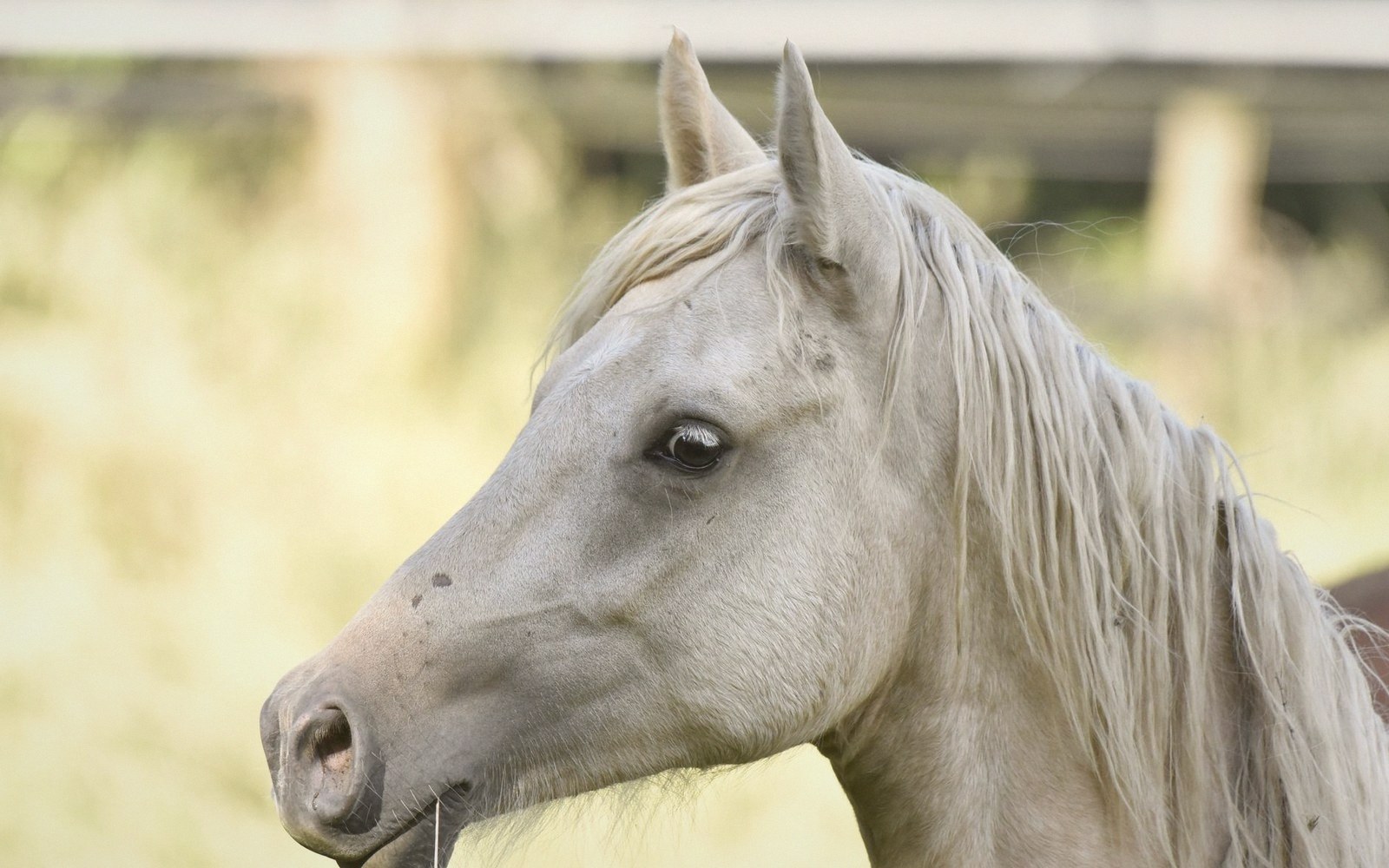
The limiting factor is the density of photoreceptors, particularly in the visual streak — the horizontal band of relatively high cone concentration running across the retina, which a horse uses to scan the middle distance of its environment. Human foveal vision packs cones tightly into a small central pit and delivers fine detail in the exact centre of gaze. The horse has no fovea. Its area of best resolution is a streak rather than a point, which suits a grazing animal scanning a wide horizon for predators but makes it poor at resolving fine detail at close range. The two systems are answering different questions: human vision asks what exactly is that thing?; equine vision asks is anything out there moving?
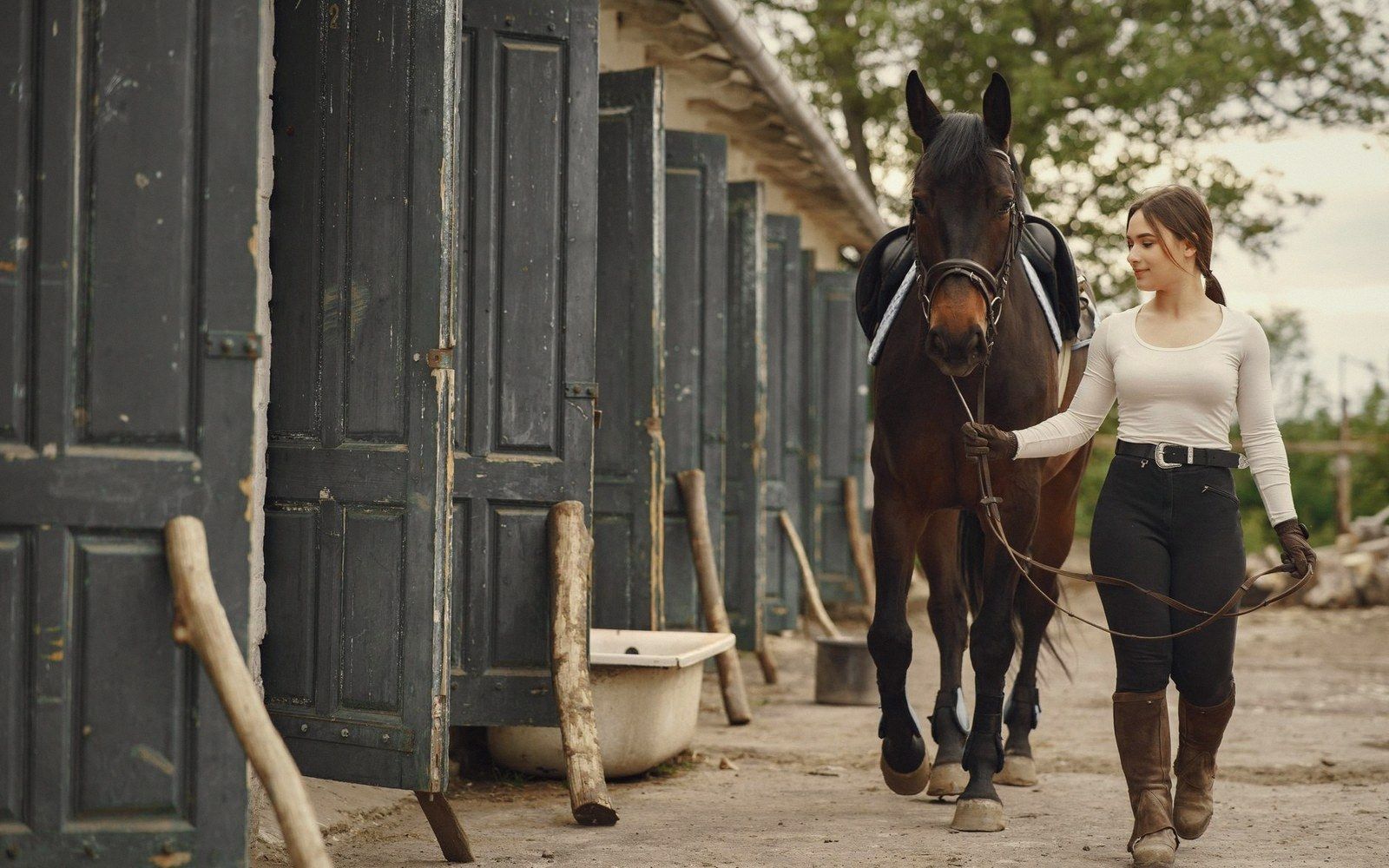
Key numbers
Observedestimated equine acuity on a human Snellen scale; a horse resolves at 20 ft what a human with good vision resolves at 30–60 ft
equine best-resolution zone is a horizontal streak across the retina, not a central pit
Rods outnumber cones in the equine retina, optimising for low-light and motion detection over fine detail
Why a familiar object in a new place becomes unfamiliar
That lower acuity has a behavioural consequence that surprises people who have not thought it through. A horse recognises things partly by the overall shape and movement signature an object presents, and partly by location and context. When resolution is coarse, the entire gestalt — outline, setting, distance, light — carries more identifying weight than fine surface detail. Change one element and the perceptual package shifts enough to register as novel.
A wheelbarrow that lives beside the gate is, over time, catalogued as safe thing in that place. Moved fifty metres down the fence line, it is no longer the catalogued object: the location has changed, the visual angle has changed, and if the light is different it will cast different shadows. The horse is not being stupid or dramatic. It is responding accurately to the fact that what it is looking at does not match any stored template well enough to dismiss. This is why habituation to an object in one location does not automatically transfer to the same object seen from a different position or at a different distance — the sensory input has genuinely changed.
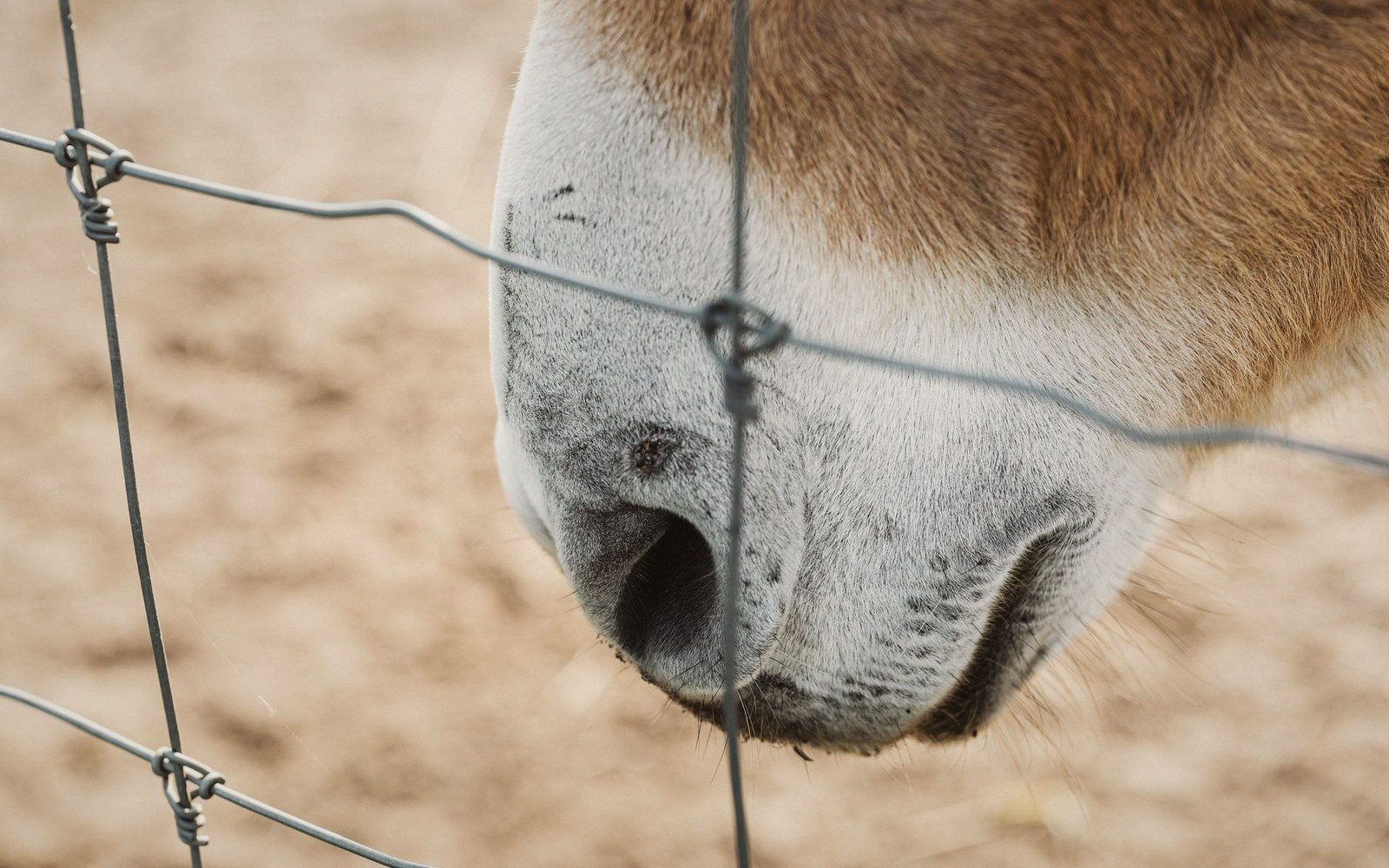
The same logic applies to people. A person the horse knows well in their usual clothes, standing in the usual place, is visually recognisable. The same person in a high-visibility jacket, or seen from an unexpected direction, may trigger a longer look. This is not unfamiliarity with the individual; it is a failure of the visual template to match quickly enough. Scent and voice — both substantially sharper in horses than in us — are often what closes the gap.
It is responding accurately to the fact that what it is looking at does not match any stored template well enough to dismiss.
Detail, distance and the moving world
There is one domain in which equine vision performs impressively: detecting motion at the periphery. Nearly panoramic lateral coverage, combined with a retina well-stocked with rods, means that movement anywhere in a very wide arc is caught quickly, even if the moving object cannot be resolved in detail. The predator-detection system does not need to know exactly what something is. It needs to know that something has moved, and to move first.
This is the evolutionary trade-off written into the retina. High acuity requires high photoreceptor density, which demands either a large eye or a trade-off against light sensitivity and field coverage. The horse has an exceptionally large eye and has still not bought foveal acuity — which tells you how much the motion-and-coverage system was worth to a prey animal whose survival depended on spotting a predator at distance, across open ground, in failing light.
The world a horse sees is wide, motion-sensitive, and somewhat soft around the edges. Not impaired — adapted.