The ground that disappears at close range
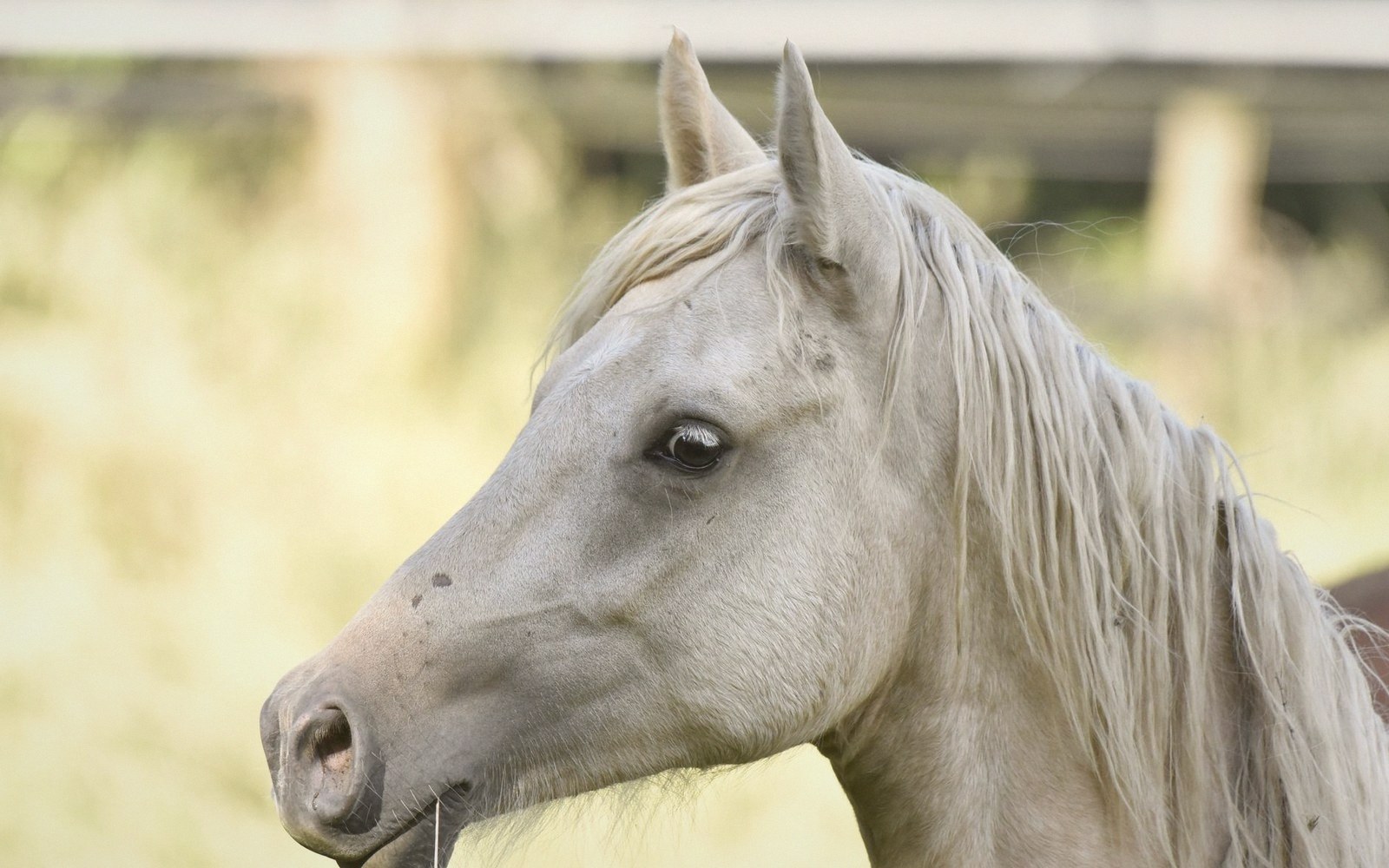
A horse's eyes sit far back and to the sides of a long skull, and that placement is the key to almost everything about equine vision. It gives close to a full circle of coverage — useful for an animal whose survival historically depended on detecting a predator at any point of the compass. But the geometry that buys panoramic reach costs something at the near end: a zone directly in front of and below the muzzle where the visual fields of the two eyes simply do not reach. Whatever falls into that cone of space is invisible.
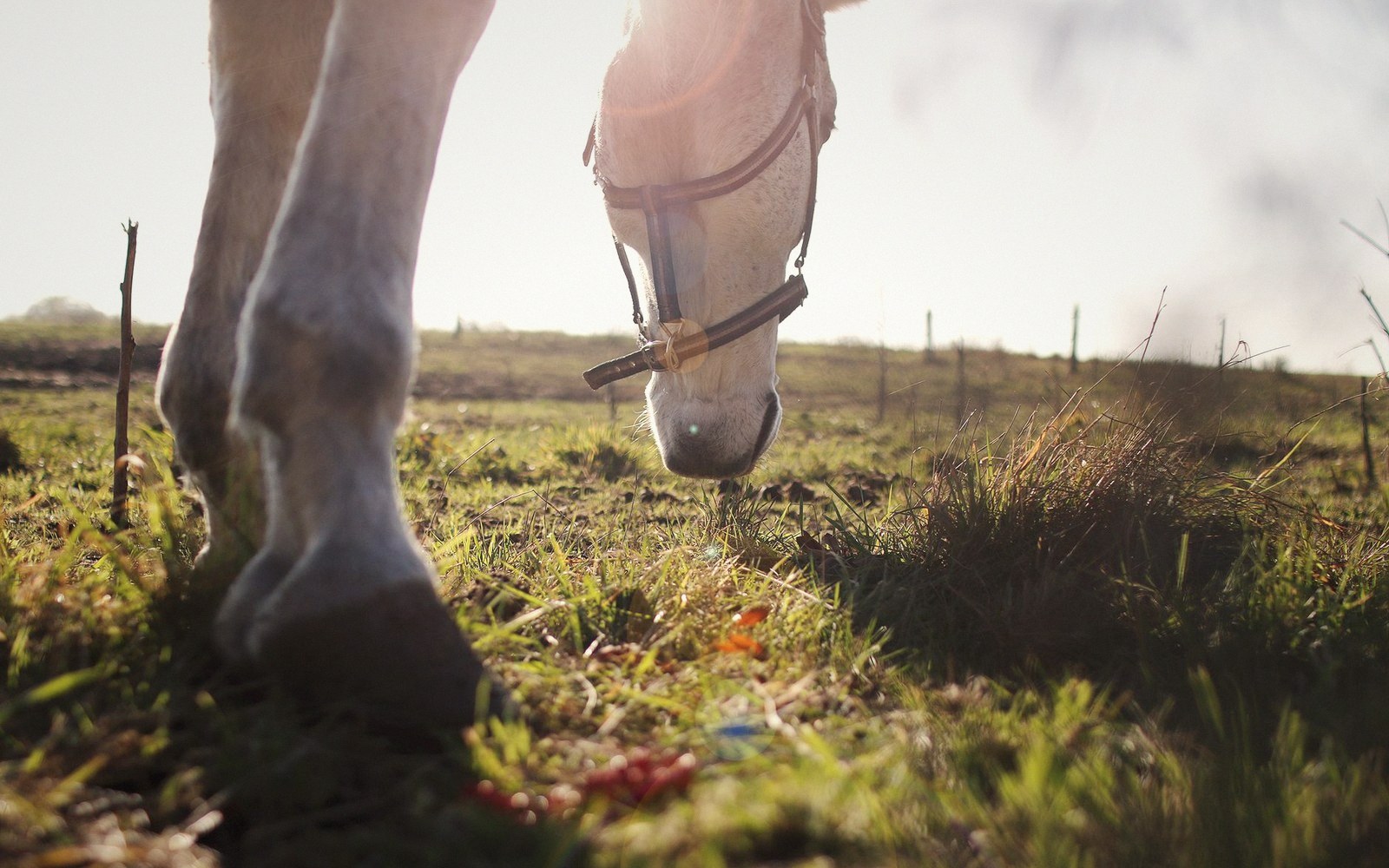
The extent of this frontal blind area depends partly on the angle of the head. When a horse carries its head in a relaxed, natural position — poll roughly level, nose slightly forward — the zone runs from somewhere around muzzle-tip downward and inward, forming a roughly triangular region that extends to the ground in front of the feet. A horse standing over a patch of grass it was eating a moment ago cannot see it once its nose is directly above it. The grass has not gone anywhere; the visual machinery has simply lost it.
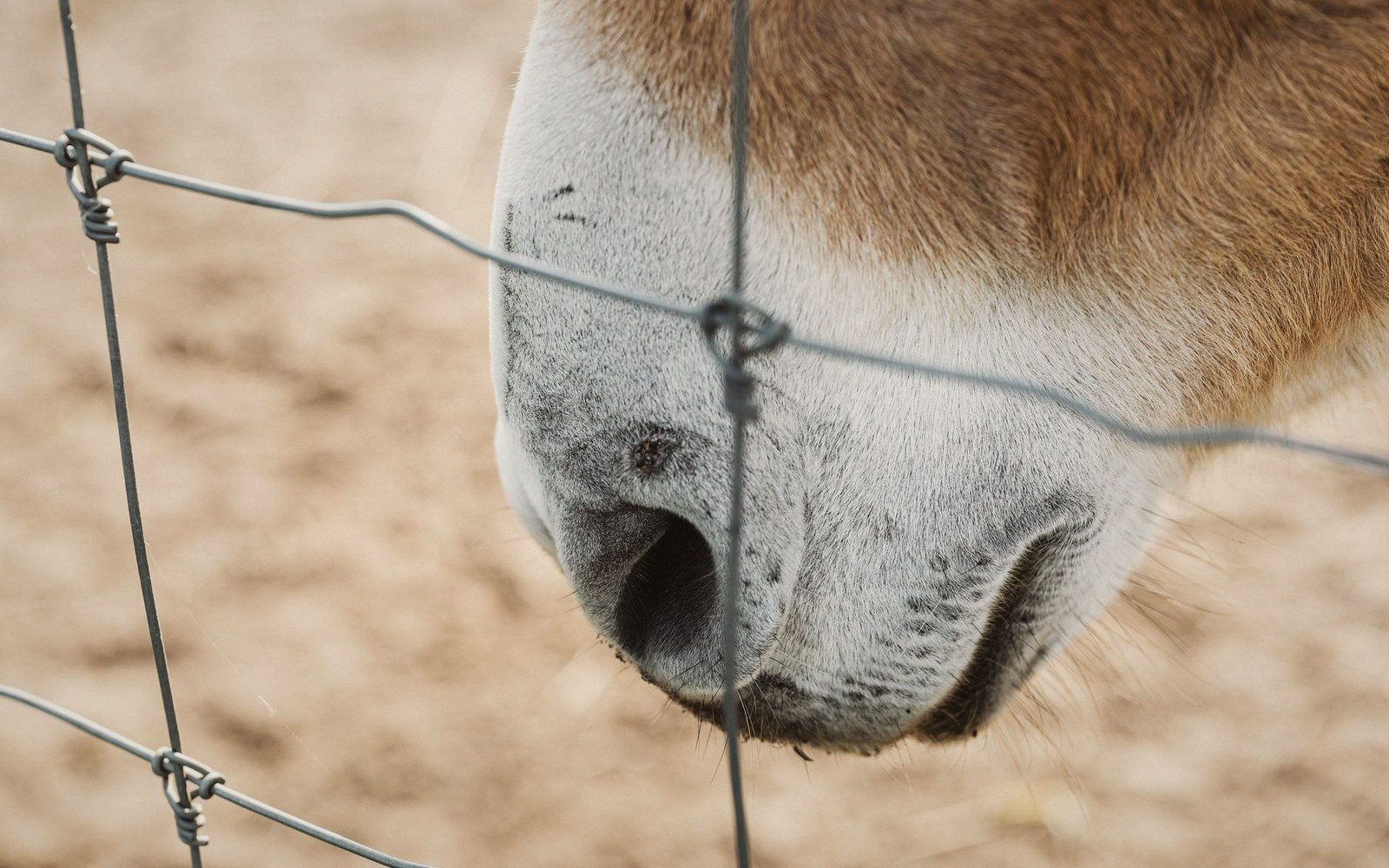
Watch a horse encounter a small object on the ground at close range and the response becomes legible. The animal raises its head and tips it slightly to one side, bringing one eye — the one with the best angle on the target — to bear on what was an instant ago inside the blind zone. It is not quirkiness and it is not evasion; it is the most direct route to getting visual information about something the forward-pointing geometry cannot reach. The head movement is the optical correction, and it is entirely routine.
Key geometry
Observedthe roughly triangular unseen region below and in front of the muzzle when the head is in a natural position; caused by the lateral placement of the eyes on a long skull
the movement a horse makes to bring one eye to bear on something that has fallen inside the frontal blind zone; not evasion, but optical adjustment
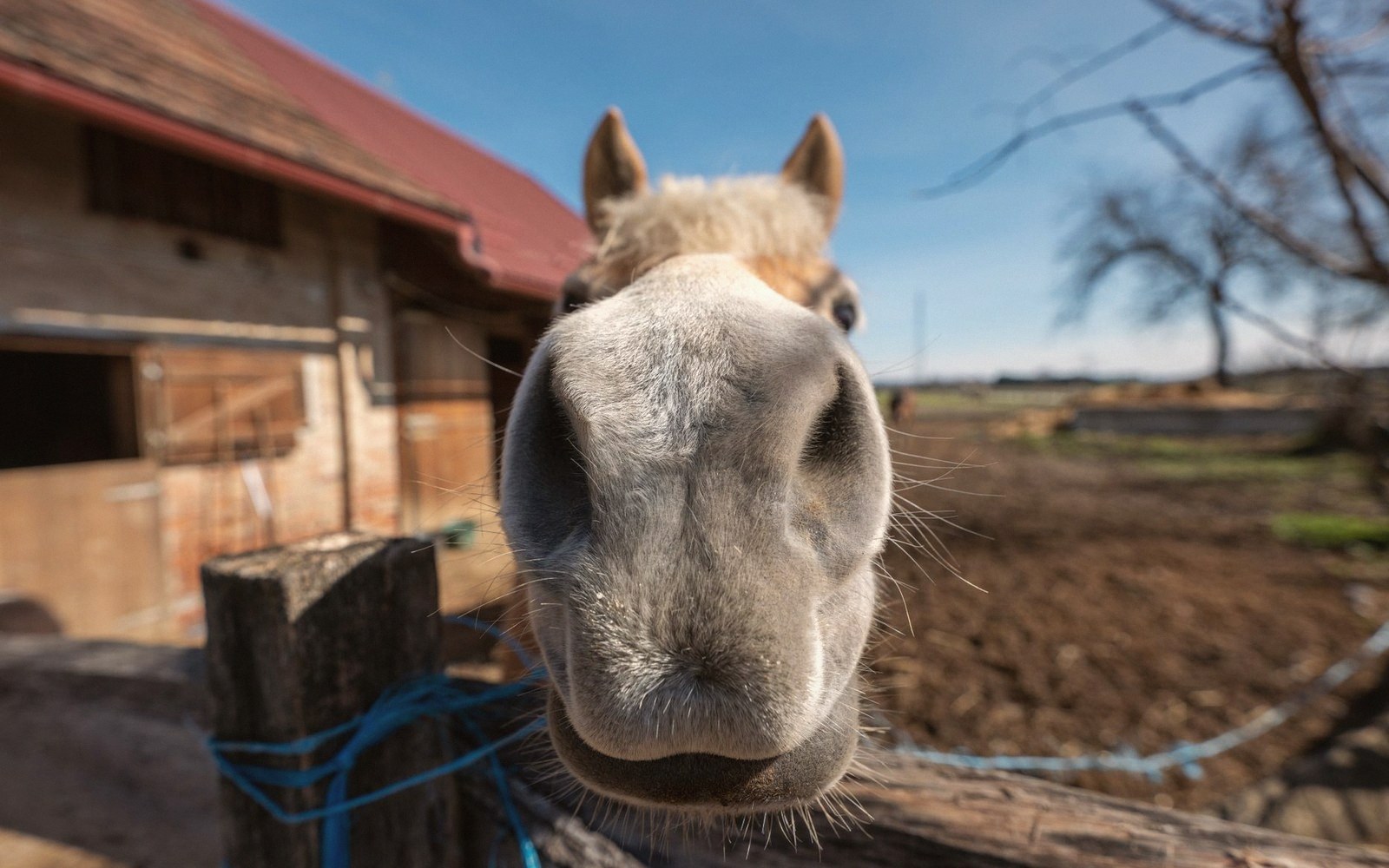
the stiff sensory whiskers around the lips and nostrils; the tactile system that takes over where the eye cannot reach, each follicle richly supplied with nerve endings
Why the muzzle supplements what the eye cannot do
The horse did not evolve without an answer to this gap. The muzzle itself is densely packed with tactile receptors. Long, stiff vibrissae — the whiskers around the lips and nostrils — are sensory instruments, each rooted in a follicle supplied with nerve endings that respond to fine displacement. When a horse investigates something at close quarters, it extends its nose toward it; what the eye cannot see, the whisker-tips can locate and characterise. The nostrils add chemical information in the same instant.
This matters for understanding what looks, from the outside, like hesitancy or head-tossing near unfamiliar objects on the ground. The animal is moving its head through a sequence of positions: eyes at an angle to get the first look, then nose extended to get tactile and olfactory confirmation. It is a coherent sensory handover, not contradictory behaviour.
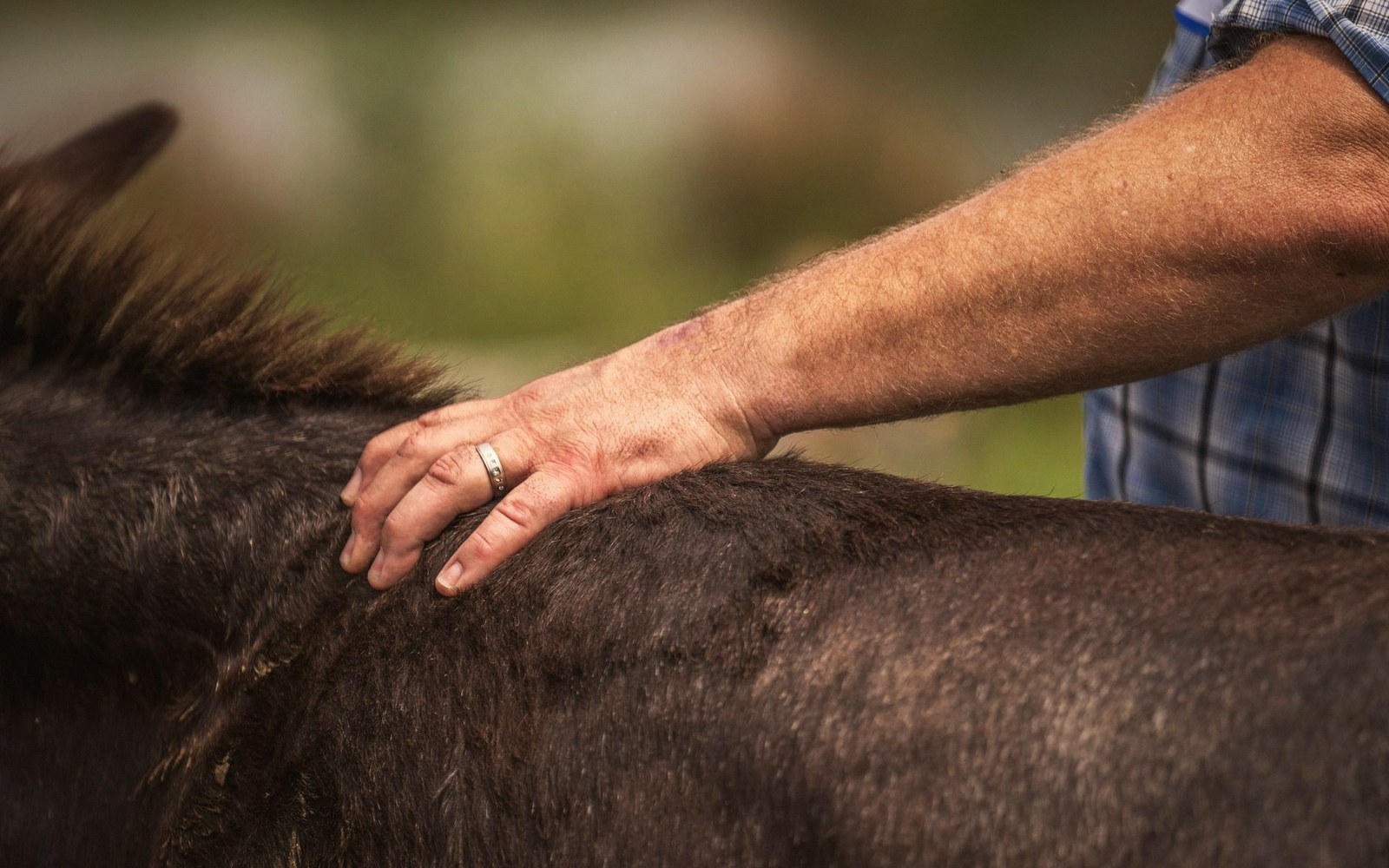
The same geometry explains something that surprises people at feeding time. A treat held flat in an open palm and pushed toward a horse's mouth can vanish from the horse's visual field at the last moment. The horse is not being clumsy or badly aimed; its mouth and the hand are both inside the frontal blind zone, and it is working by feel and smell rather than sight. The whiskers are doing the job the eyes have stepped back from.
When a horse investigates something at close quarters, it extends its nose toward it; what the eye cannot see, the whisker-tips can locate and characterise.
How this sits alongside the other blind zones
The frontal zone is the less-discussed of the horse's two main blind areas. Most attention goes to the region directly behind the hindquarters, which carries obvious implications for how an animal reacts to being approached from the rear. The zone at the nose is quieter in its consequences — the horse encounters it dozens of times a day, in grazing and eating and investigation, and navigates it without drama precisely because the tactile and olfactory systems are so well provisioned for exactly this role.
There is also the question of what happens when an object is lost by moving from the visible periphery into this frontal zone, not by withdrawing but simply by coming too close. The disappearance is sudden and real, even if the distance involved is small.
The frontal blind spot is not a design flaw. It is the predictable trade-off of a visual system built for panoramic surveillance from a mobile skull atop a long neck, with whiskers at the tip as the appointed close-range instrument. Each part of the arrangement makes sense in relation to the others.