The radius that tells you how an animal reads the world
Every horse carries an invisible threshold around its body. Cross it, and the animal moves away. Stay outside it, and the animal stays still. That threshold — the flight distance — is not fixed. It shifts with the individual, the context, the direction of approach, and the history the animal has accumulated. What looks like a simple behaviour is in fact a live readout of how a horse is currently assessing risk.
The concept comes from the ethologist Heini Hediger, who developed it in the mid-twentieth century while working with captive and wild animals. Hediger distinguished flight distance from what he called the critical distance: the tighter zone that, when breached by something the animal cannot escape, triggers a defensive response rather than retreat. Both describe the same fundamental geometry — a bubble of perceived safety — but they sit at different radii, and their consequences differ sharply.
In feral and free-ranging horses, flight distances to approaching humans are measurably larger than in domestic horses, and they vary considerably between populations. Animals that have experienced consistent, neutral exposure to people — neither frightened nor fed — tend to habituate downward over generations as well as within individual lifetimes, through the ordinary mechanism of habituation. Animals that have experienced aversive encounters show the opposite: an inflated threshold that can persist long after the original event.
Key concept
Observedthe radius at which an animal moves away from an approaching figure; first systematised by ethologist Heini Hediger
Hediger's term for the tighter inner zone; when breached with no escape route, triggers defence rather than retreat
the animal's background state of alertness, which varies by context and recent experience; high baseline expands the flight-distance threshold
What pushes the radius in and out
Speed of approach matters more than most people expect. A slow, indirect line compresses the flight distance considerably compared with a direct, fast one — the latter mimics the approach pattern of a predator, and the horse's nervous system responds accordingly. Angle matters too: a straight-on approach from the front or rear triggers flight at greater distances than an oblique one from the side, partly because the horse's visual field resolves the two differently.
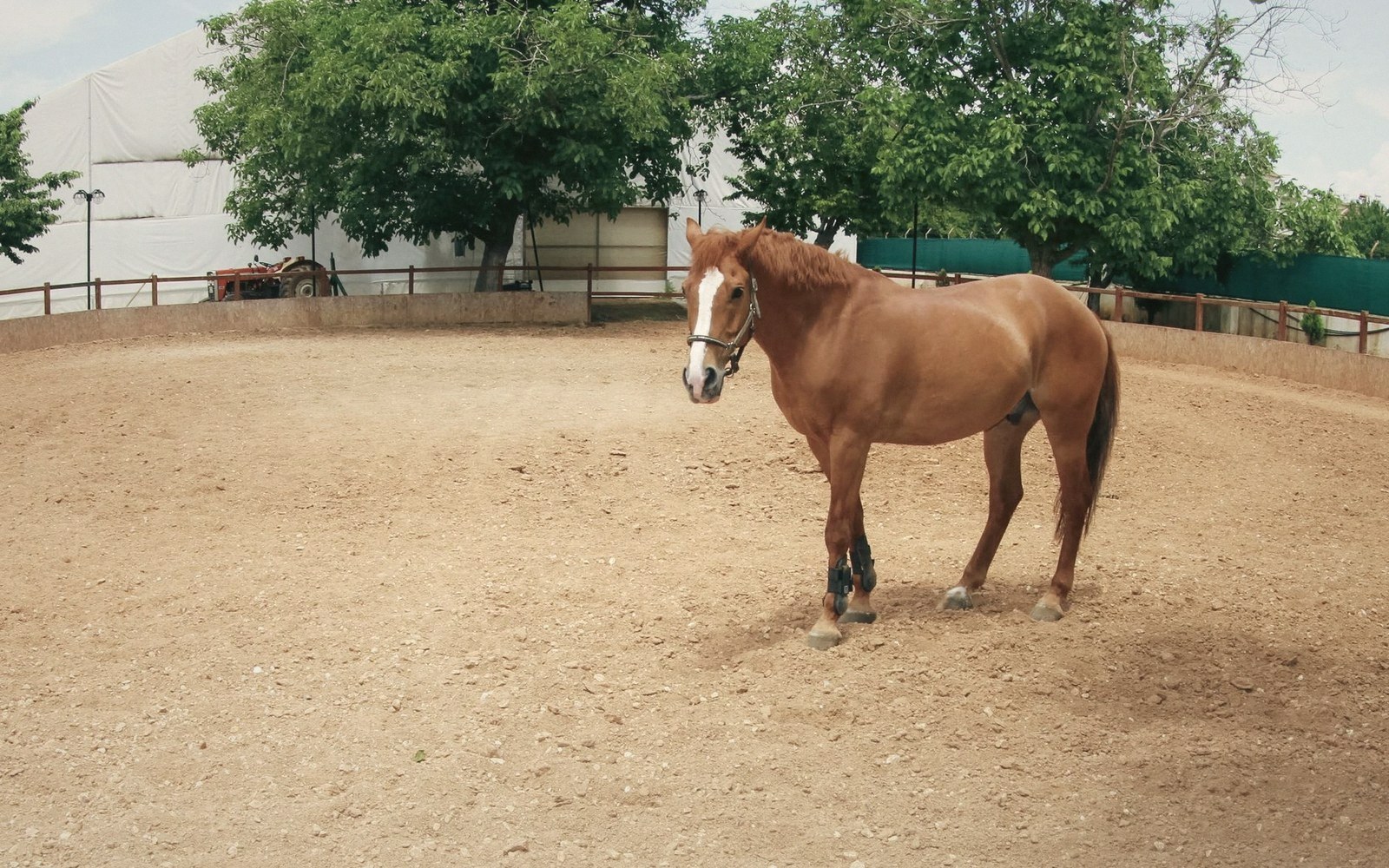
Individual variation is substantial and not simply a matter of handling history. Research on free-ranging groups consistently finds that some animals are consistently bolder — quicker to stand their ground, slower to move off — while others within the same band, with the same human-contact history, maintain a larger buffer. Some of this variation is temperament; some reflects position within the social group, since animals under social stress are already running a higher baseline arousal and reach their threshold sooner.
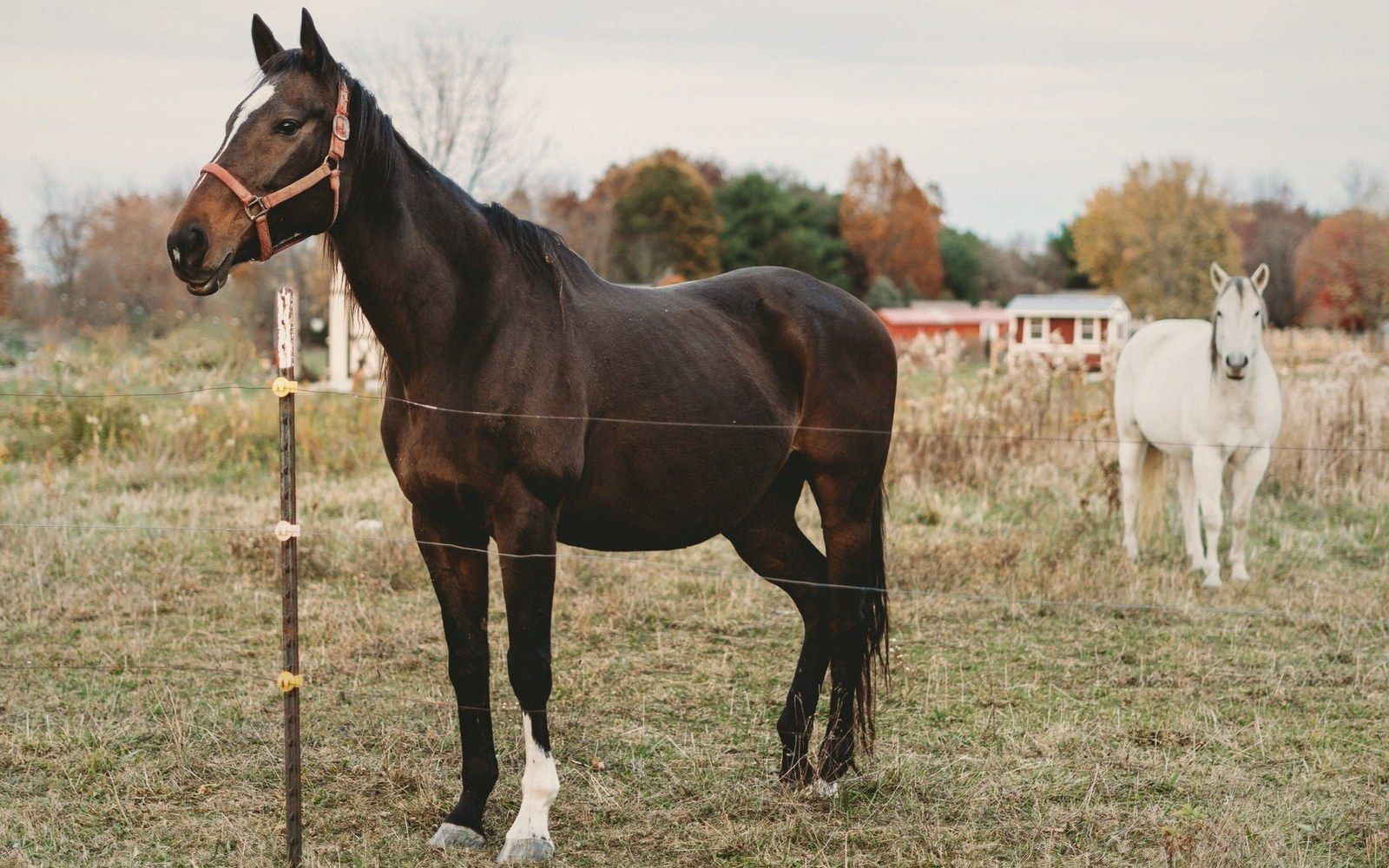
Context layers onto both. A horse alone in a field maintains a larger flight distance than the same horse in the company of settled companions, because herd presence is itself a piece of risk information — if the others are calm, there is social evidence that the approaching thing is not dangerous. A horse at a water source, a mineral lick, or a pile of forage will often tolerate a closer approach than it would in open ground, because motivation to stay competes with motivation to flee. Even time of day plays a role: low-light conditions increase vigilance, and an approach in late evening triggers flight earlier than the same approach at midday.
What is harder to hold in mind is how quickly the radius can change. A horse that stands at close range one morning may be unapproachable the next, because something else happened — a dog in the hedge, a tractor through the gate at speed, a social disruption in the group — and settling from that is not instant. The flight distance is not a personality trait so much as a current measurement. It reflects recent experience, present arousal state, social context, and the particular set of cues the approaching figure is giving off, all at once.
Hediger's insight was that flight distance is not timidity — it is information management. A prey animal that permits a predator to get too close before fleeing is a dead one. The radius is calibrated to leave enough time and space to escape. That calibration is not an error to be corrected; it is the architecture the animal runs on. Understanding what expands or compresses it explains a great deal about what horses respond to, and why the same animal, on different days and in different company, seems like a different animal entirely.