The blind area no one usually warns you about
Most people who spend time around horses learn fairly quickly about the area directly in front of and below the muzzle — the patch of ground a horse cannot see without lifting or turning its head. The rear blind spot gets less attention, which is worth correcting, because it covers considerably more territory.
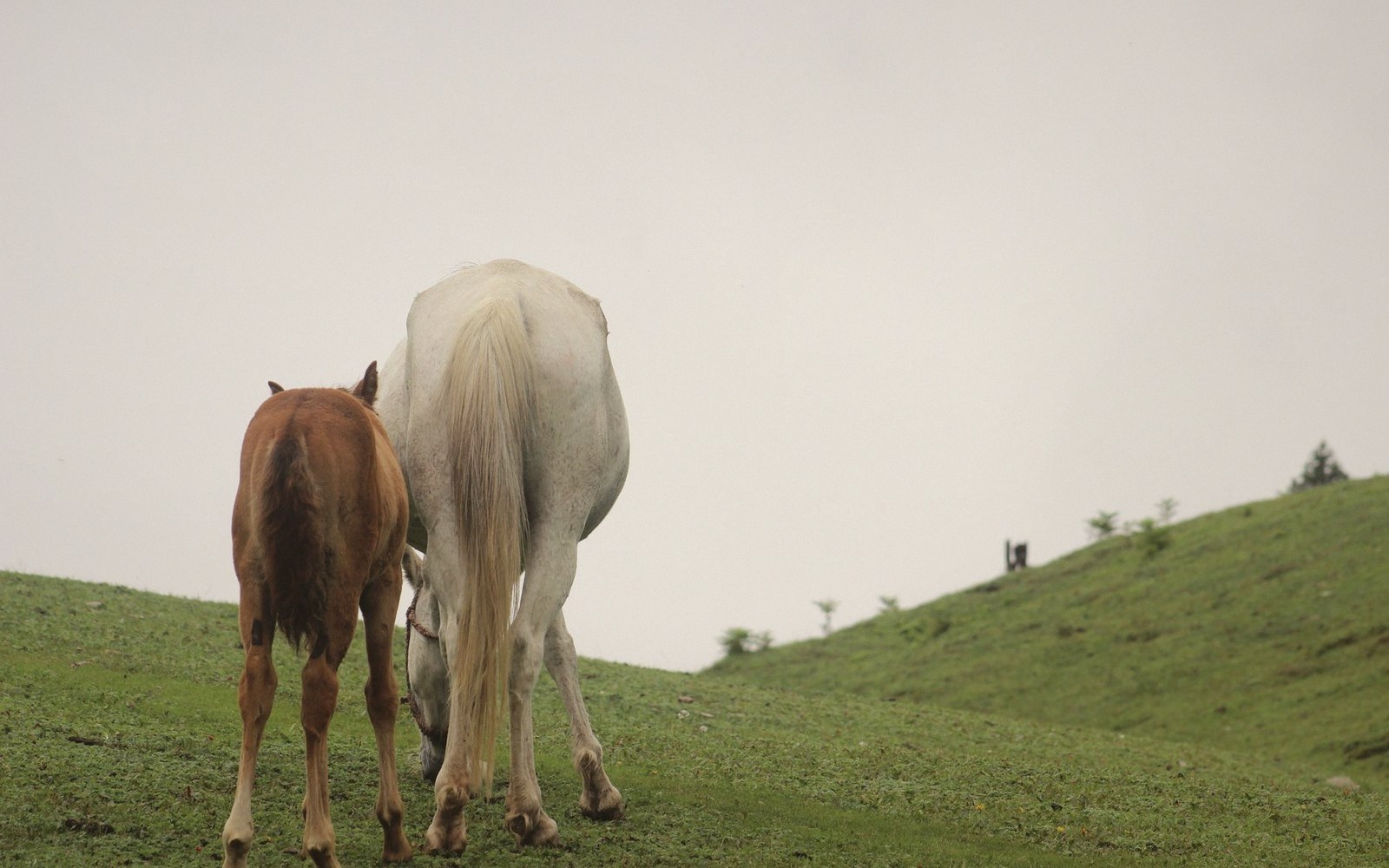
A horse's eyes sit wide and high on the sides of the skull, each with its own lateral field extending far around the body. The two monocular fields overlap in a narrow binocular zone in front, and together they account for most of the circle around the animal. But "most" is not all. Directly behind the hindquarters — roughly in line with the spine and centred on the tail — sits an area of genuine, continuous blindness. The animal cannot rotate its eyes rearward, and the skull blocks any compensatory angle. Whatever is happening in that cone simply does not exist visually for the horse.
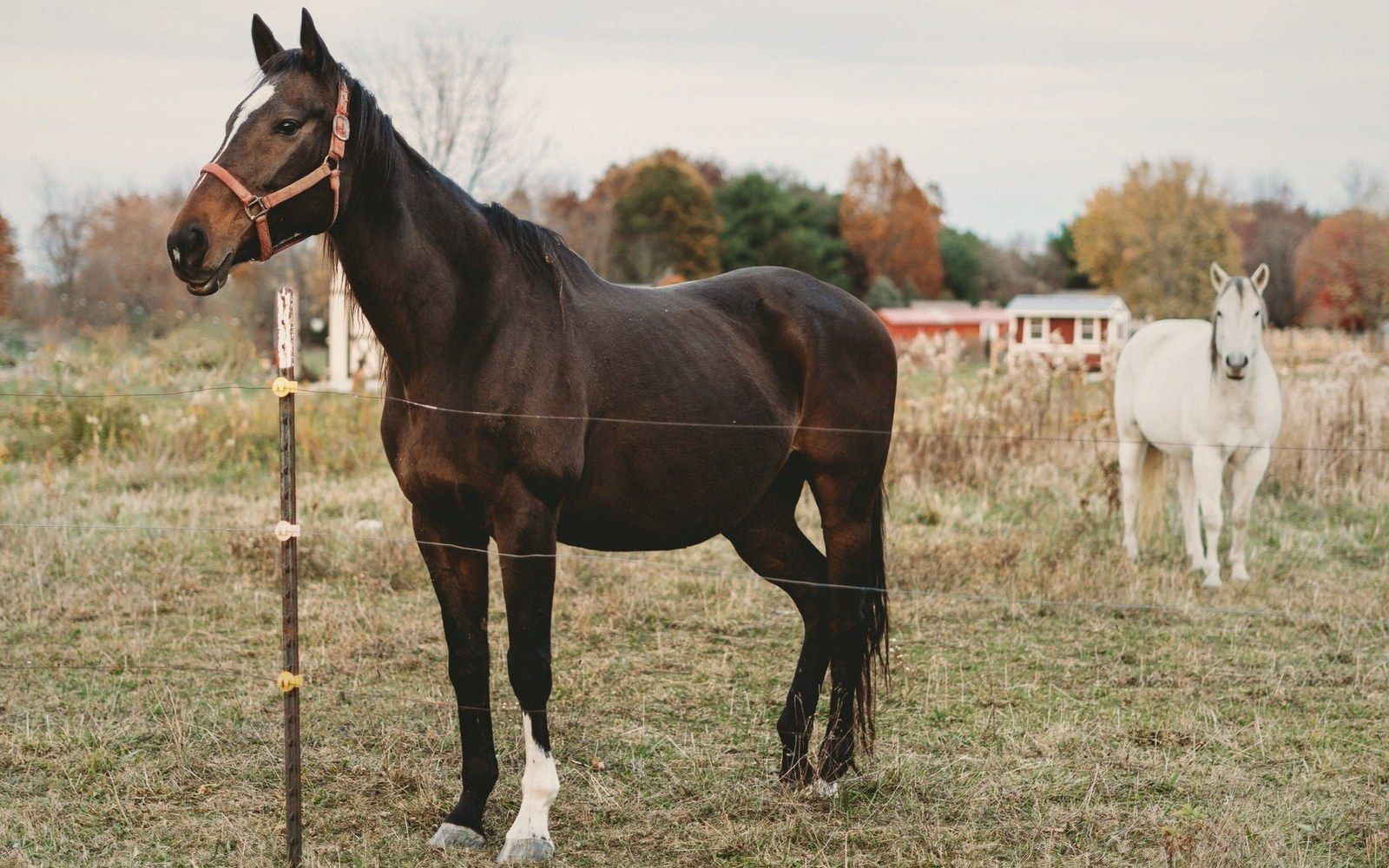
The exact angular size of this zone is sometimes given as a fairly narrow wedge measured horizontally at the rear, though estimates vary by study depending on how the eye's optical axis is measured and how much head movement is factored in. What is not in dispute is that the zone is real, that it is wide enough to contain an entire standing adult, and that it closes only when the horse turns its head or body.
The logic of that history runs all the way to the startle reflex — fast, involuntary, muscular — which requires no visual confirmation to fire.
The geometry in numbers
Observedestimated at roughly 60–70 degrees centred on the spine directly behind the hindquarters; wide enough to contain a standing adult
the patch below and in front of the muzzle; see the companion piece for detail
narrow zone in front where both eyes' fields overlap; used for near focus and depth
Why the geometry matters
The rear blind spot has a particular quality that the front one lacks: it is the direction of least information combined with the direction of greatest evolutionary threat. A predator overtaking from behind is the scenario that shaped the horse's flight apparatus over millions of years. The logic of that history runs all the way to the startle reflex — fast, involuntary, muscular — which requires no visual confirmation to fire. Sound, air movement, ground vibration, a touch landing without warning: any of these, arriving from behind without prior notice, can trigger the full sequence of alarm before the horse has had any chance to identify what caused it.
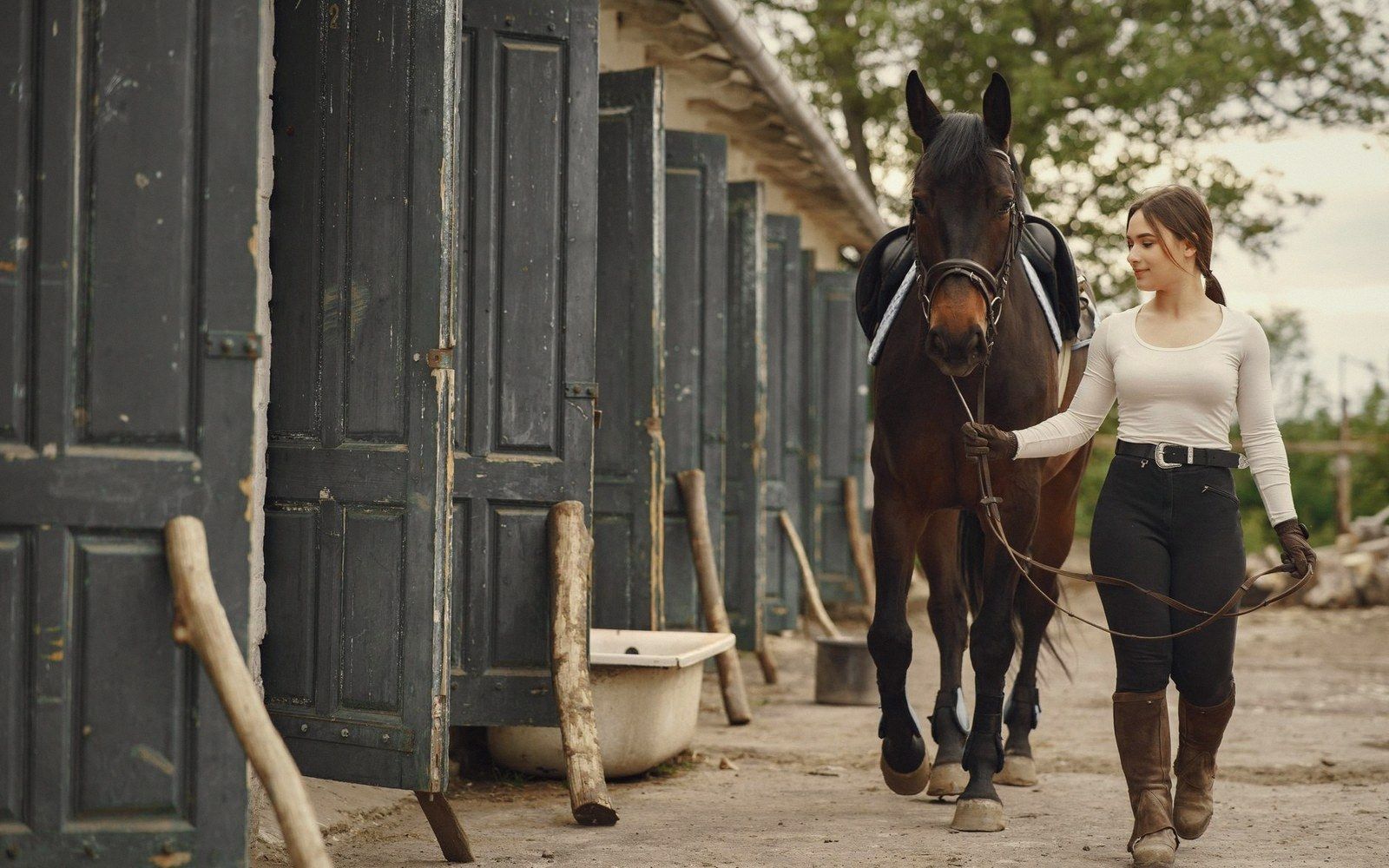
This is not timidity or poor temperament. It is the predictable output of a nervous system built for exactly this contingency. A horse that kicks when touched on the hindquarters from behind has not made a decision; it has executed a reflex that, in the environment it was shaped for, would have been the right one far more often than it was wrong.
What interrupts the reflex, or at least gives the cognitive brain a chance to catch up, is prior information. A voice arriving before a body does is not merely polite convention — it constitutes genuine sensory input that changes the animal's assessment of what is approaching. The horse may not yet be able to see the source, but it can hear it, and if that sound has a reliable history of preceding safe contact, the association can modulate what would otherwise be a pure startle. Habituation and association both operate on this principle: the nervous system is not fixed in its responses, but it needs the information early enough to use it.
Approach angle works on the same logic. Moving toward a horse from the side — angling in toward the flank rather than walking straight at the spine — progressively enters the wide monocular field long before reaching the blind zone. The horse can track the approach with one eye, identify it, and by the time contact occurs the stimulus has already been categorised rather than arriving unannounced. The geometry does the cognitive work; the animal is not startled because it was never uninformed.
None of this demands that anyone maintain an anxious awareness of exactly where they are standing at every moment. It does suggest that understanding why a horse responds as it does, physically and spatially, makes those responses legible rather than baffling. A horse that spins or kicks from behind is reporting accurately on a stimulus that arrived from outside its visual world. The body is doing what the body was built to do. The explanation was there in the anatomy all along.