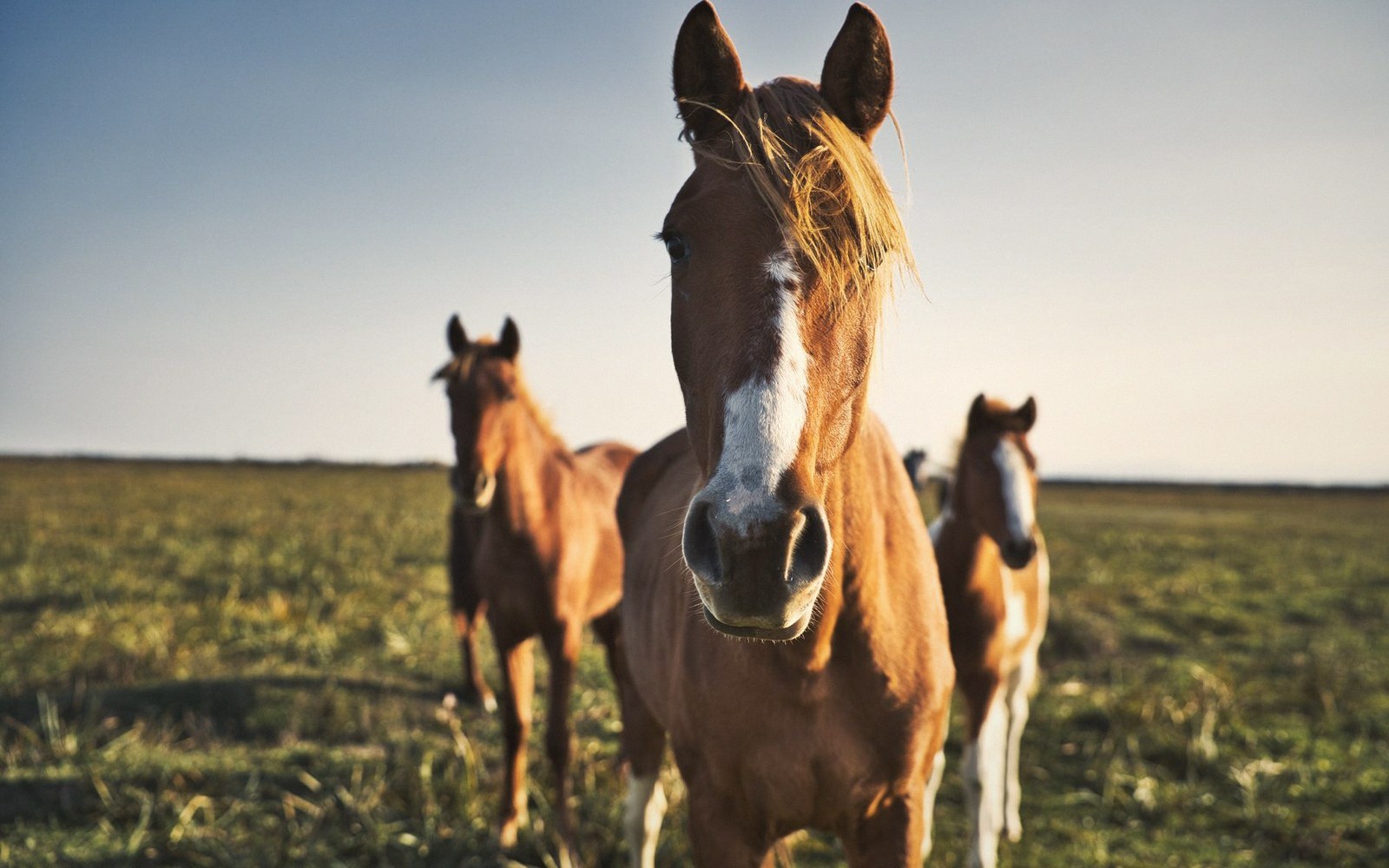
Ears
Independently mobile and pointed at whatever has attention, which makes them the most readable signal on the animal.
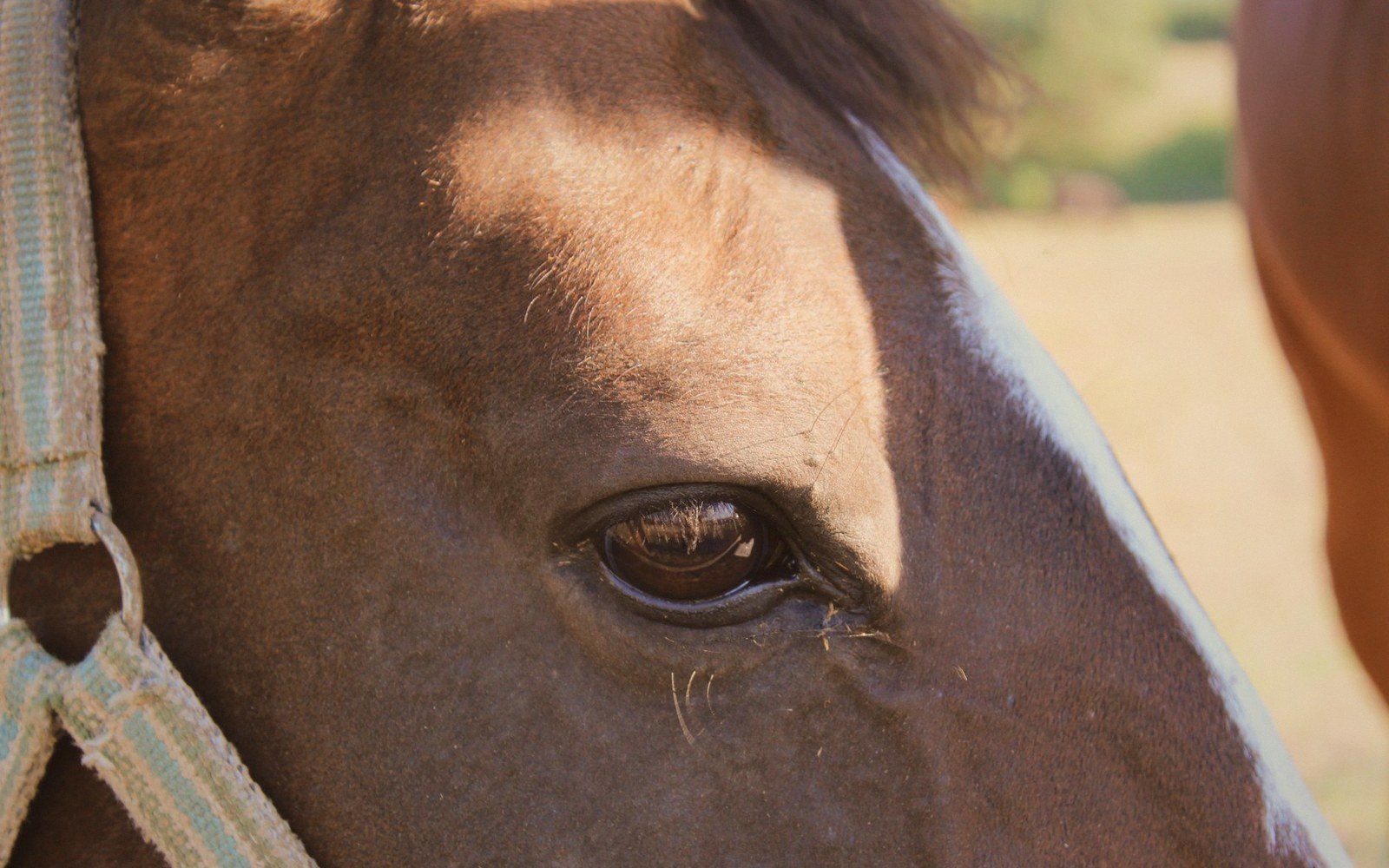
Eyes set on the sides of the head give a horse close to a full circle of vision with only a narrow binocular strip in front. It is a prey animal's arrangement: enormous coverage, poor depth except straight ahead, and it explains a great deal of behaviour that gets read as temperament.
Read nearly panoramic →A hand rests on the neck while the near eye holds the camera. The far eye is working on a separate scene.
Photo: sena keçicioğlu / Pexels
Set the eyes on the sides of the head and you get a field that runs nearly all the way round, a narrow strip of overlap in front, and two places the animal cannot see at all. Much of what gets read as temperament begins in that geometry.
Coverage of roughly 350 degrees leaves very little unseen, but the unseen is awkwardly placed: a narrow wedge directly behind the hindquarters, and a wedge below and in front of the muzzle. An object brought slowly toward the nose passes out of view before it arrives, which is why a horse tips and turns its head to inspect something close.
Outside the binocular strip each eye works alone. That monocular image carries movement, shape and contrast, and almost no depth — so a thing moving at the edge of the field registers as something moving with no distance attached to it.
Linear hierarchies are easy to draw and hard to find. Observations of free-ranging bands describe family groups, movement initiated by different individuals on different days, and relationships better described by who tolerates whose company than by rank. This section is here because the question is contested, not because the story is wrong.
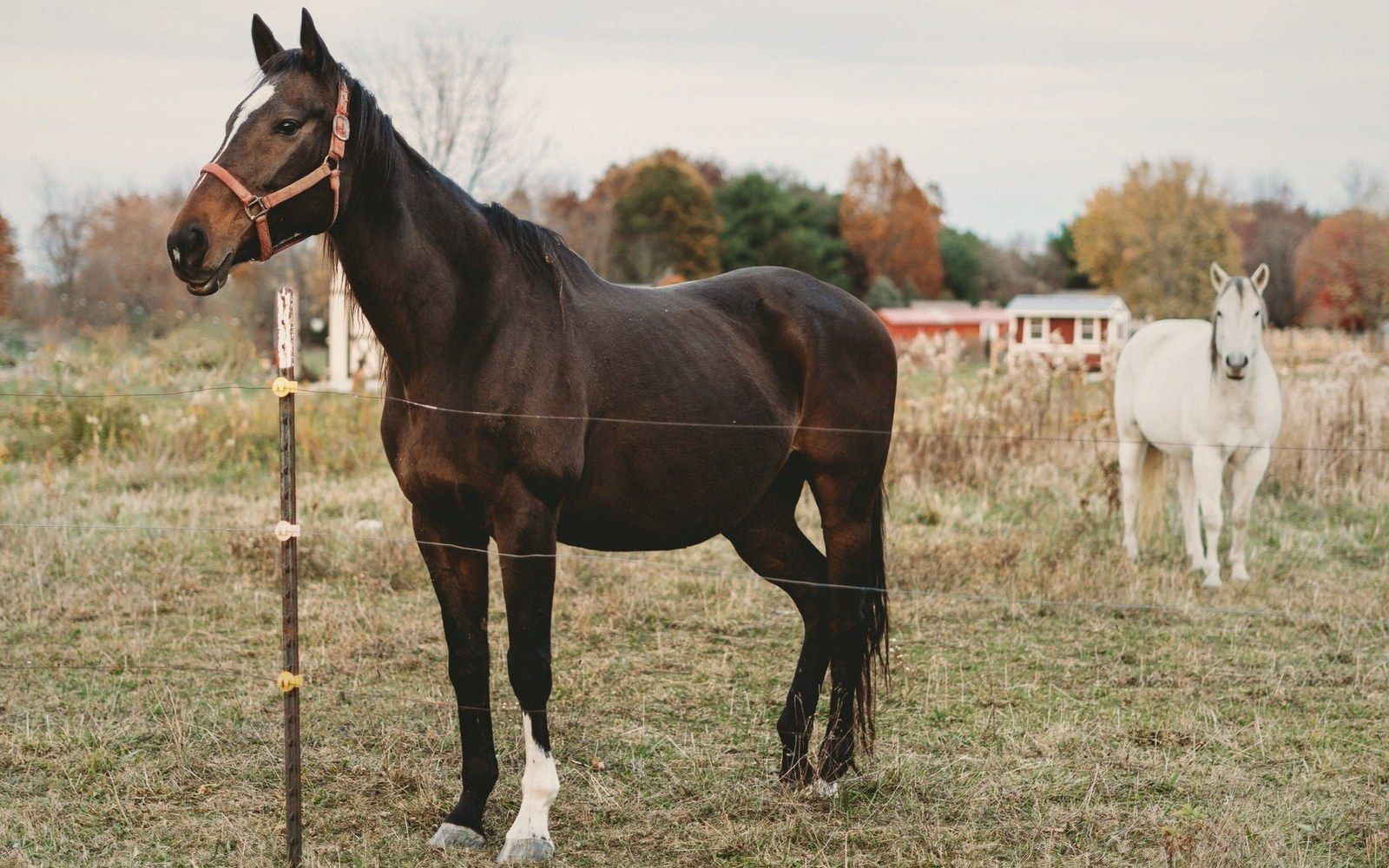
One head comes up and the group's attention reorganises around it. Nobody has been appointed.Photo: Steven Van Elk / Pexels
Independently mobile and pointed at whatever has attention, which makes them the most readable signal on the animal.
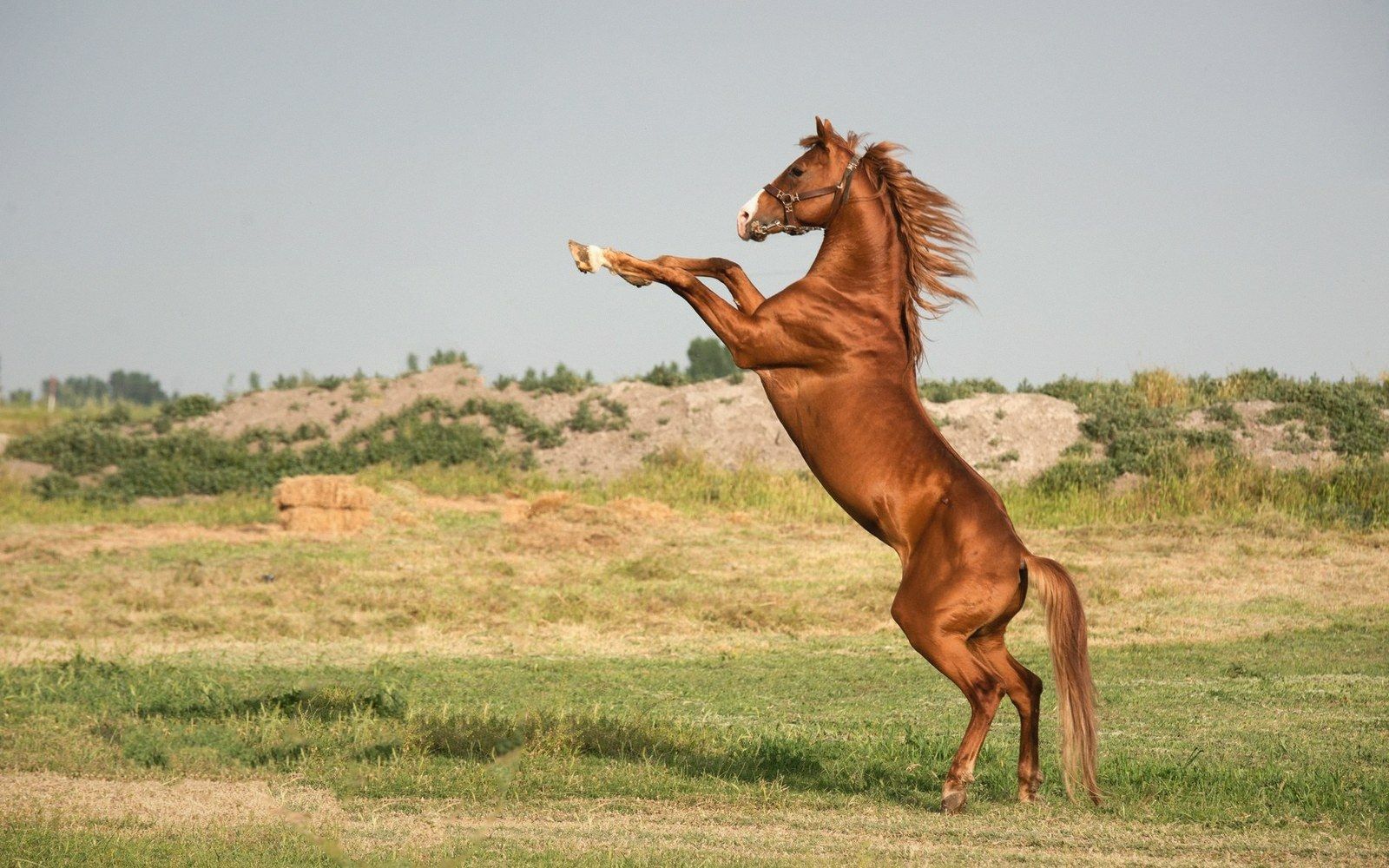
A reflex, not a decision — it happens faster than any deliberate response could.
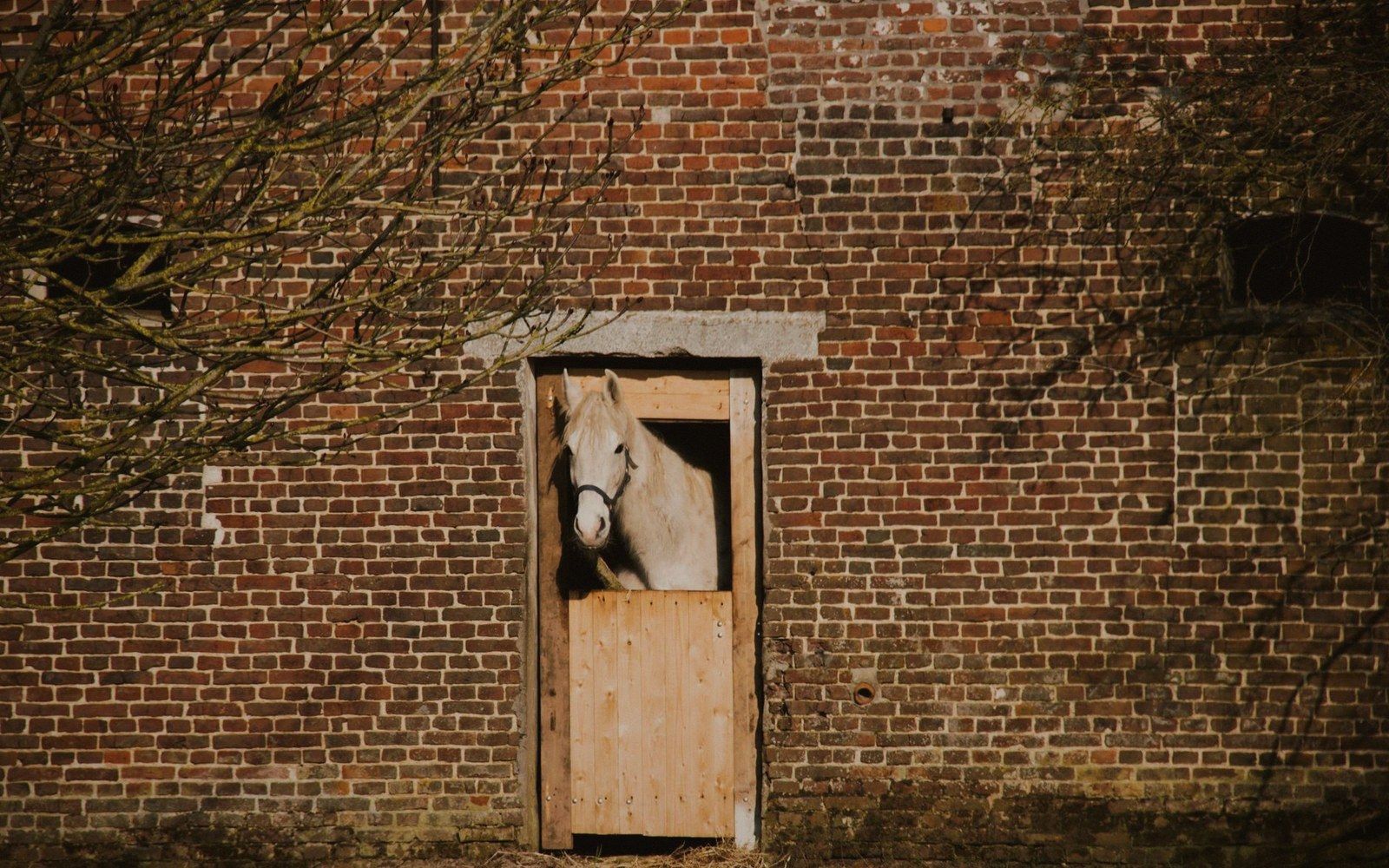
Excellent in low light, slow to adapt between the two — a dark doorway at noon is a genuine problem.
Every entry separates what is observed from what is inferred, and says where the science is contested. Nothing here is guidance: this site describes how the animal perceives, learns and lives with others, and does not say what to do with one.
Practices and researchers grazing the same ground we do — field behaviour, perception, and what horses actually notice.