A different bargain with darkness
A horse's eye contains far more rod photoreceptors than a human eye does, and rods are the machinery of low-light vision. By most estimates, the horse's tapetum lucidum — the reflective layer behind the retina that bounces light back through the rods a second time — gives it usable vision in ambient light conditions that would leave a human effectively blind. This is the legacy of a prey animal that evolved on open ground where predators do not keep office hours.
The cost of that advantage is adaptation time. When humans move from bright sunlight into a dim space, our pupils take somewhere between fifteen and twenty-five minutes to reach full dilation — but our eyes begin picking up useful detail within the first few seconds, because we have a high concentration of cone cells that hand off quickly to the rod system. The horse makes that handover more slowly. Moving from bright light into a genuinely dark space, a horse may need considerably longer before its vision resolves into anything it can read with confidence. The numbers are not settled in the literature with precision, but the directional finding is consistent: adaptation is slow relative to the speed at which horses are often expected to move through changing light conditions.
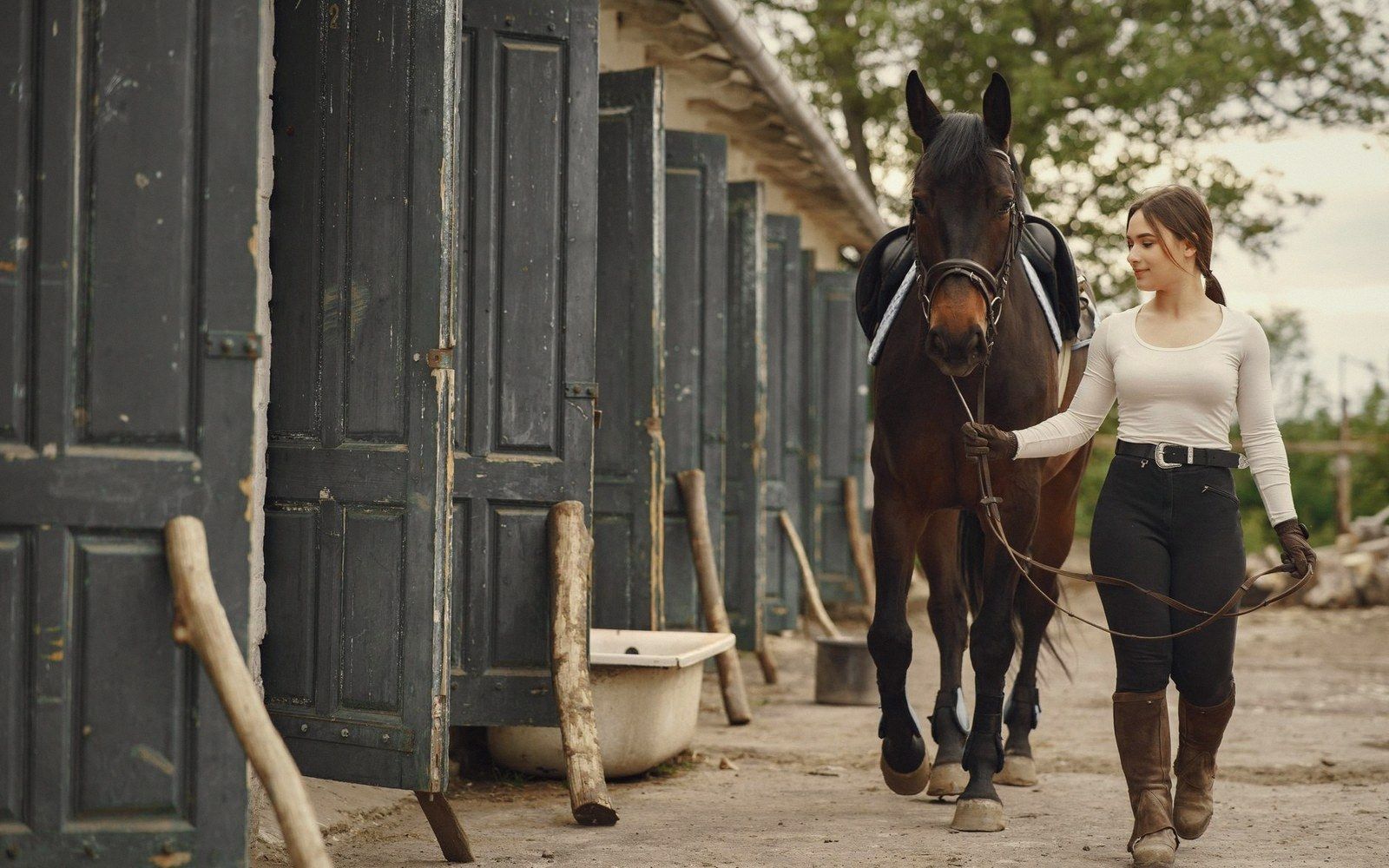
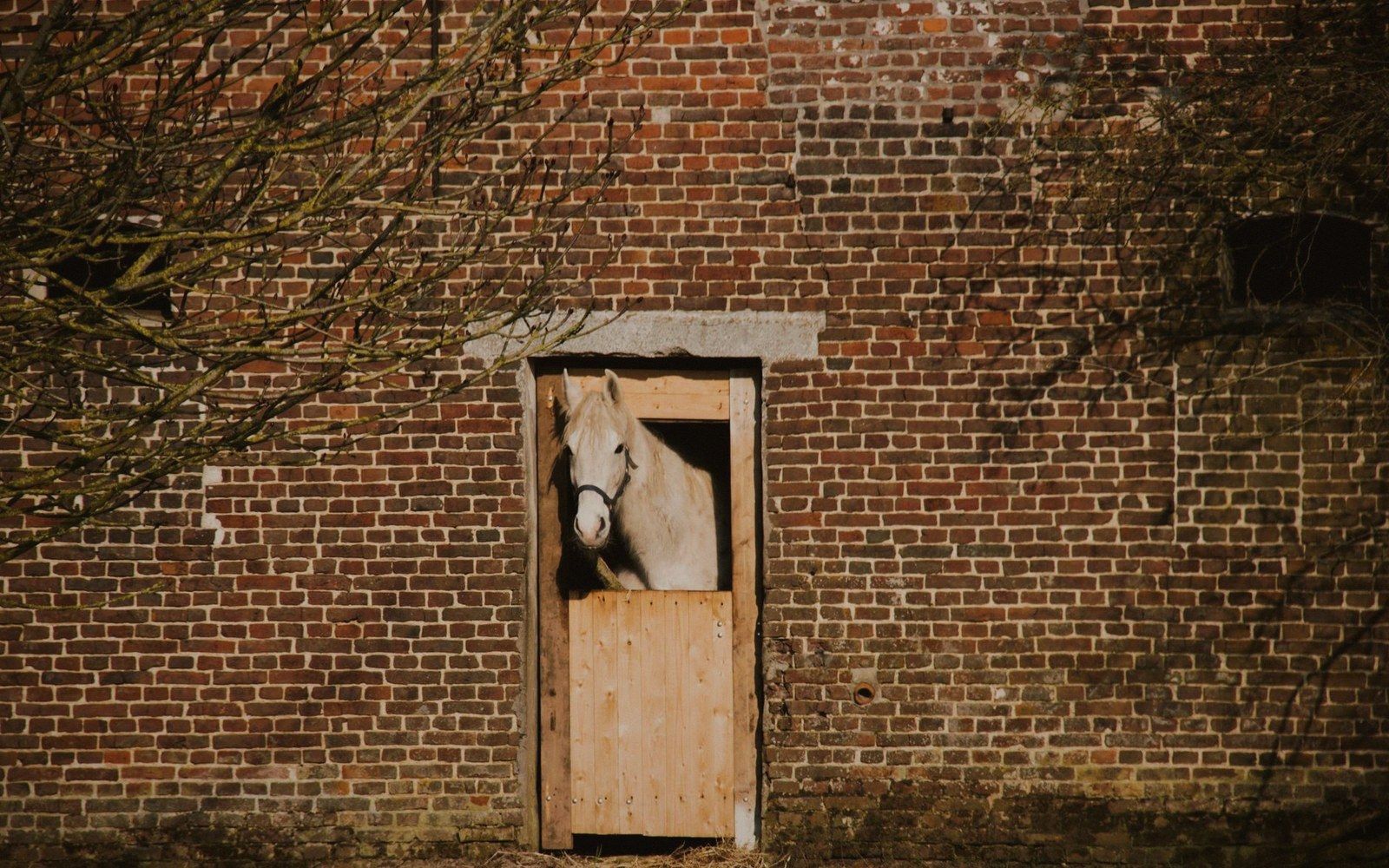
This is why a dark trailer ramp or a shadowed stable doorway on a bright noon day is a genuine perceptual problem, not a behavioural one. From outside in full sun, the interior may appear to the horse as a near-total void — a featureless darkness into which it is being asked to step without knowing what the ground does, whether there is a step up or down, or what occupies the space. The startle reflex evolved precisely for this kind of ambiguity. Stopping, or swerving, or backing away is not stubbornness; it is an eye doing exactly what eyes are supposed to do when they cannot resolve a surface.
The key asymmetry
Observedthe adaptation cost runs one way; bright-to-dim is the hard direction, not the return
The reverse journey — from a dim stable into bright midday light — is easier for the horse than it is for us, because the rods suppress quickly and the cone system engages fast. Adaptation to brightness is generally rapid in mammals, including horses. It is the bright-to-dim direction that costs the animal time, and specifically the intermediate stage, where the eye is neither fully dark-adapted nor reading detail clearly in full light.
None of this is obscure biology. A horse standing at the threshold between two very different light levels is, for a measurable window of time, working with genuinely degraded information about what it is looking at.